38.8415045024,-7.077379329 / 38.4295985372,-7.30221314393
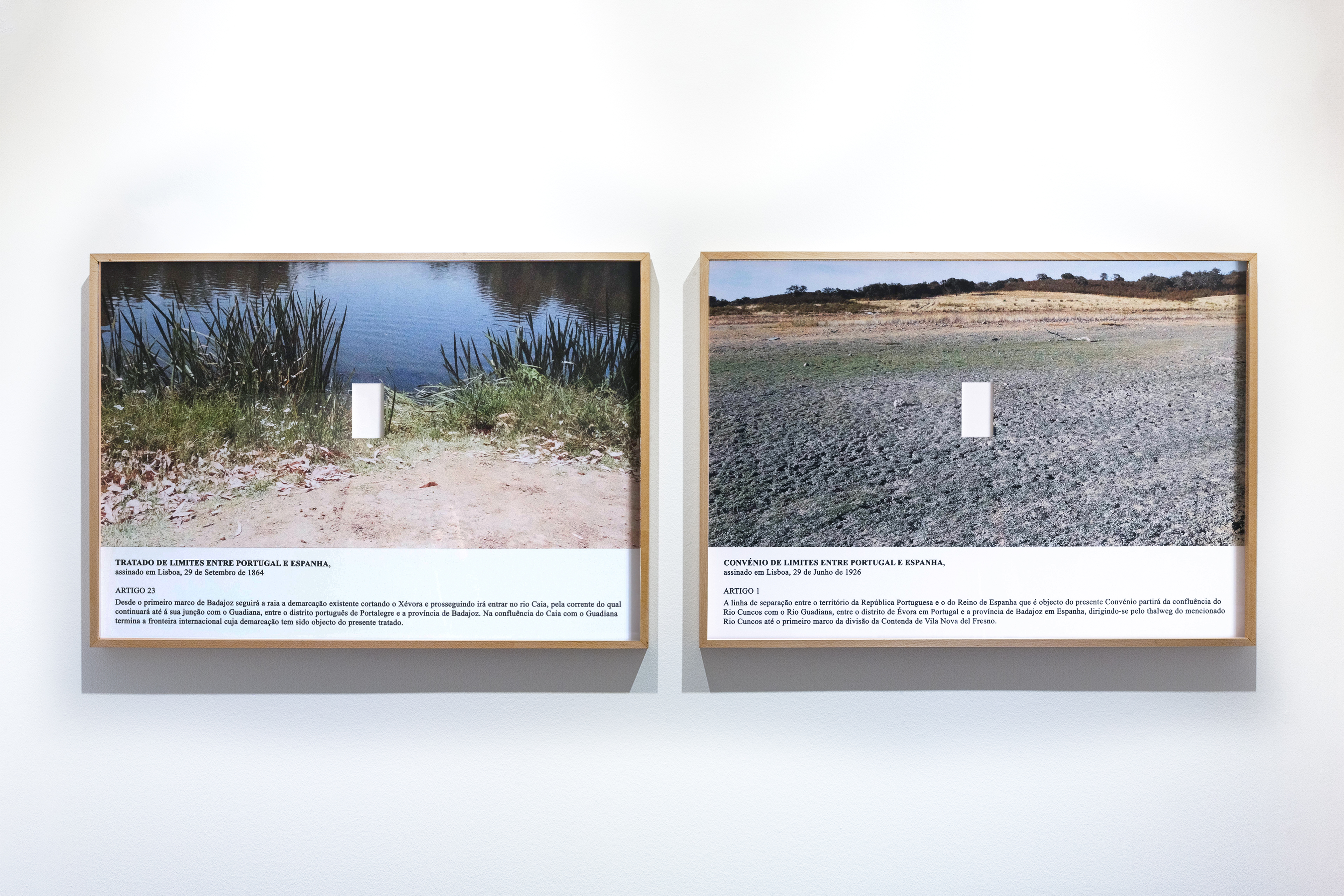
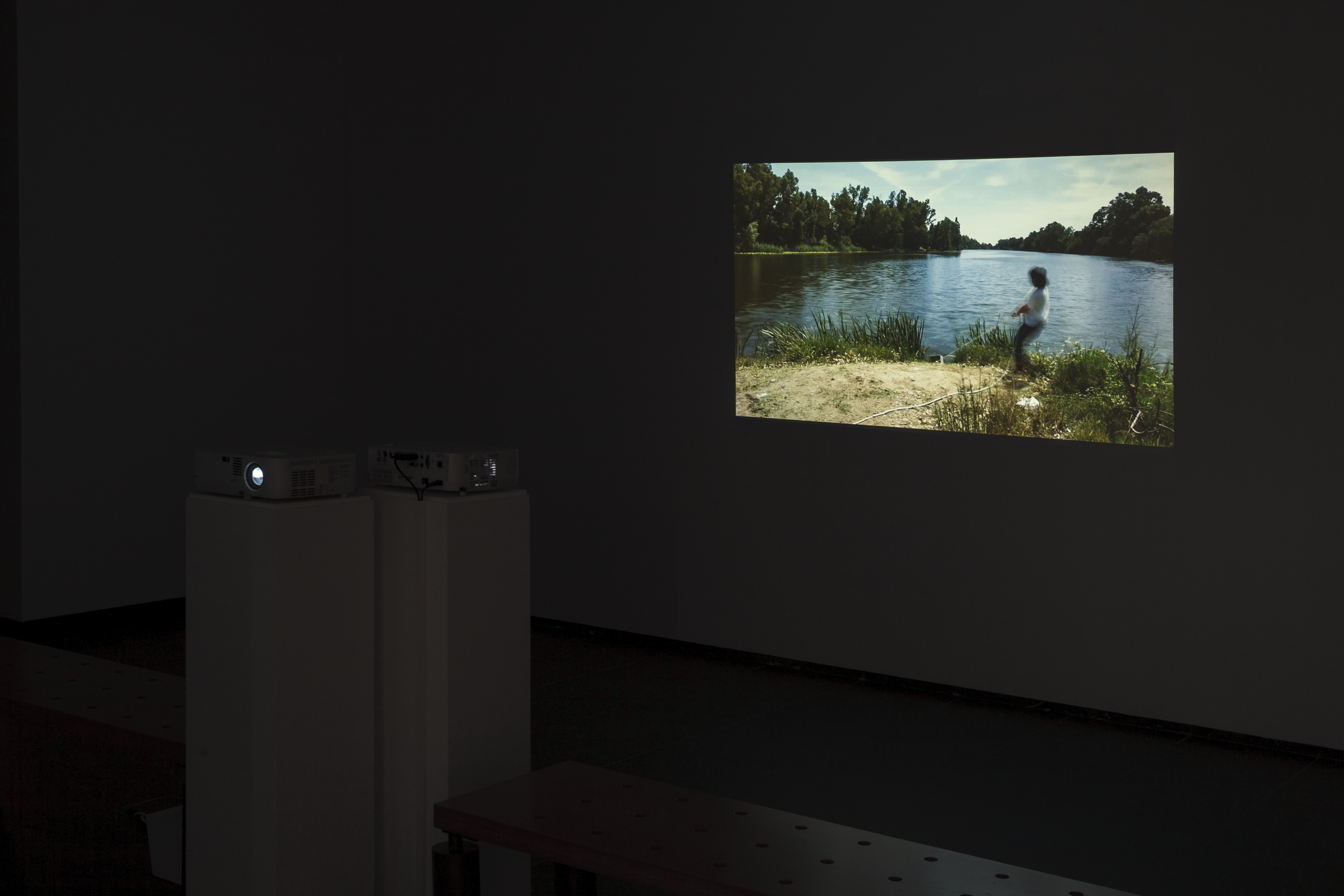
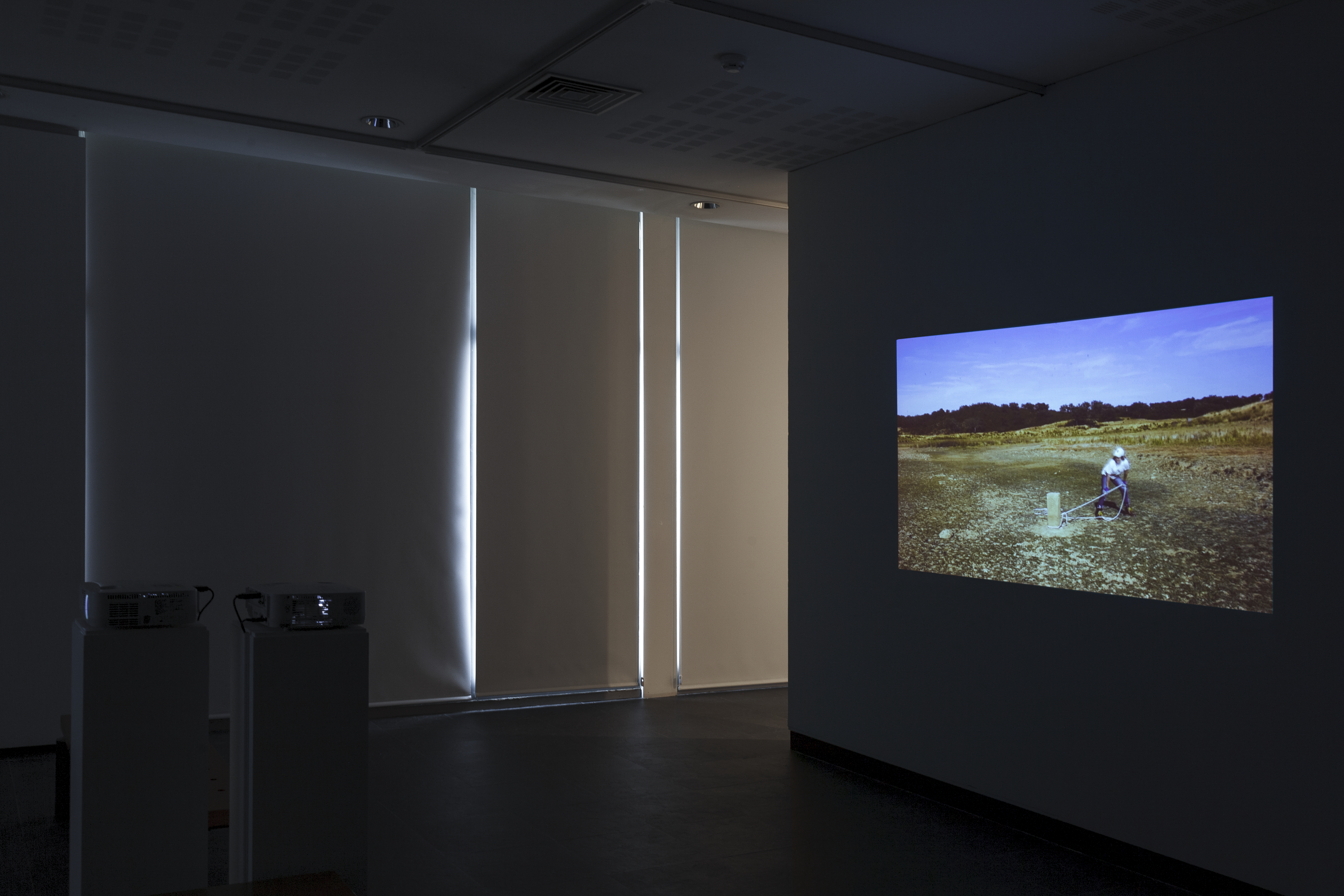
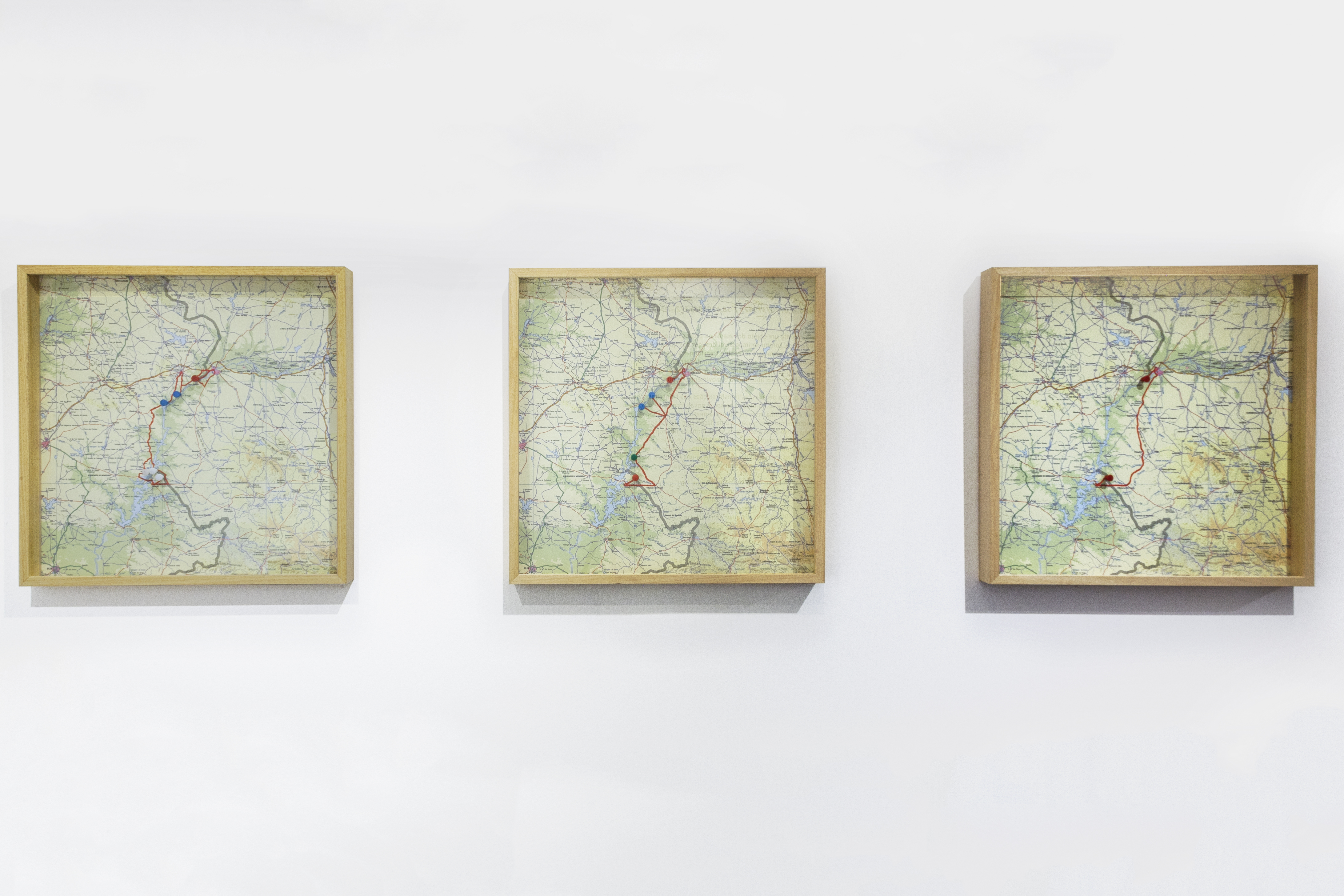
“Raia” is the name of the line that separates and unites Portugal and Spain. Although stable for a long time, there is a “door” that both nations never closed - the border with the territory of Olivenza.
Ninety-seven border markers are missing, from the border marker 802 to 899, which the coordinates “38.8415045024,-7.07707379329 / 38.4295985372,-7.30221314393” refer to. This somewhat invisible divider of human thought is a “fiction” with genuine socio-political effects that define territories as a way of expressing our identity in the world. Here, the border is an invisible line, factually representing this mutability and this space-time movement through its history.
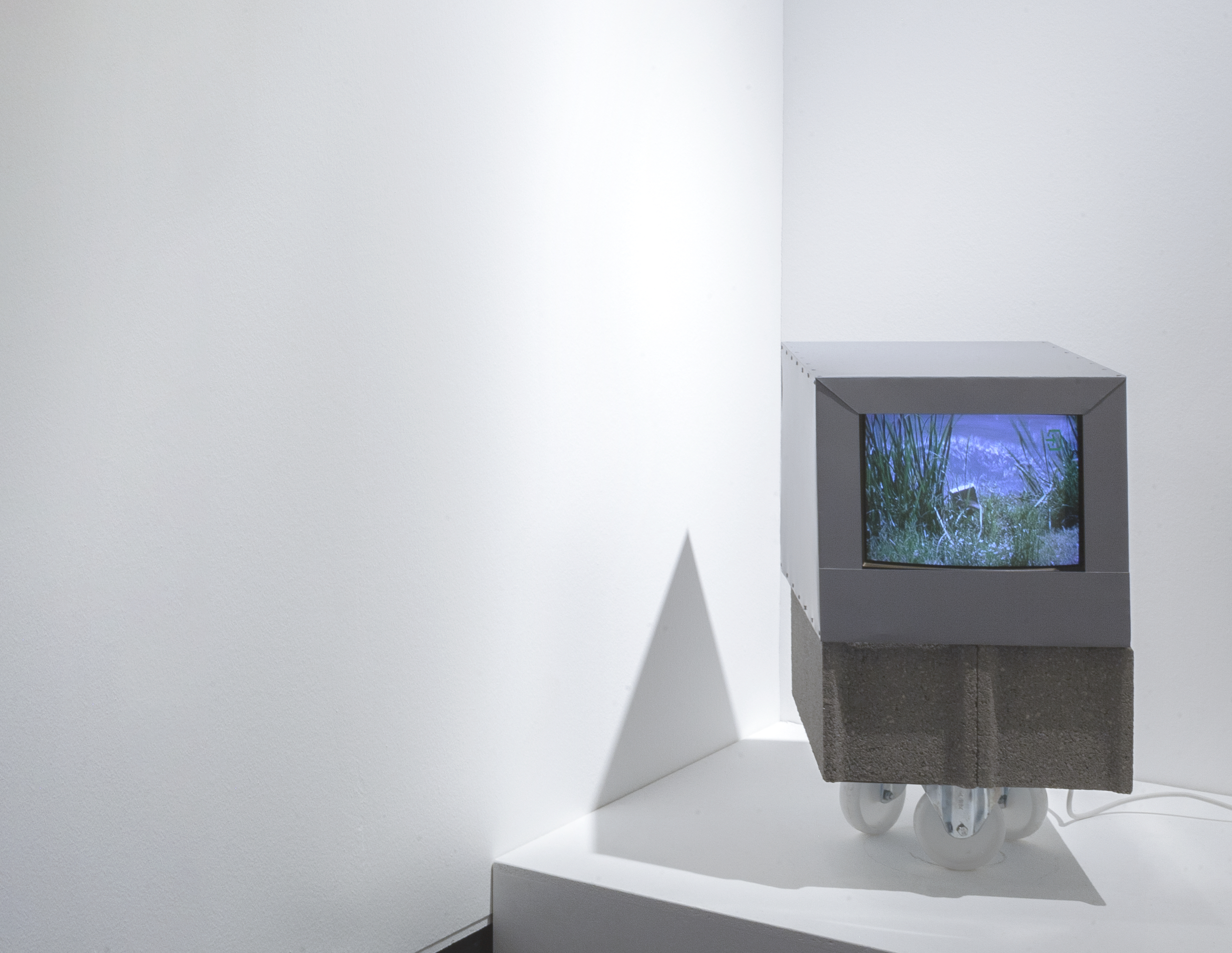
Thus, the 38.8415045024,-7.077379329 / 38.4295985372,-7.30221314393 project attempts to question this mutability and the physical hardness that these border markers represent.
Exhibition view at Vieira da Silva Municipal Gallery
Photos — Fernando Pina